“Solidarity economy principles are not new. They are drawn from our rich legacy of Black liberation and freedom movements. There are many examples, however imperfect, throughout the world. These range from the Zapatistas in Chiapas, Mexico; to the women’s movement in Rojava in northeast Syria; to Cooperation Jackson in Mississippi.
Solidarity Economy & Food Systems
What are Solidarity Economies?
The solidarity economy represents an economy for people, not profit. Solidarity economics emphasizes cooperation, shared ownership, participatory democracy, and care – essential for creating equitable food systems. It is both a framework and a movement, meaning there are solidarity economy organizers and networks worldwide that share these same values and practices to transform our social, economic, and political structures towards a more liberated future.
As a movement, solidarity economies emerged in Latin America in the 1990s as a response to the massive job losses, industry deregulation, and cuts to public spending, where communities and displaced workers started mutual aid networks and cooperatively-owned businesses.
As a framework, solidarity economies is an explicitly anti-racist, feminist, and ecological collection of practices that transcends all forms of oppression by providing counter practices to shift consciousness, build power, and create economic alternatives.
Community Food Strategies believes solidarity economies can help build liberated food systems. See more about how solidarity economies is one of our guiding frameworks (Link).
Solidarity-based economies seek to guarantee everyone’s access to food.
Read more about SE principles here and here.
What Do Solidarity Economies Have To Offer Food Systems Work?
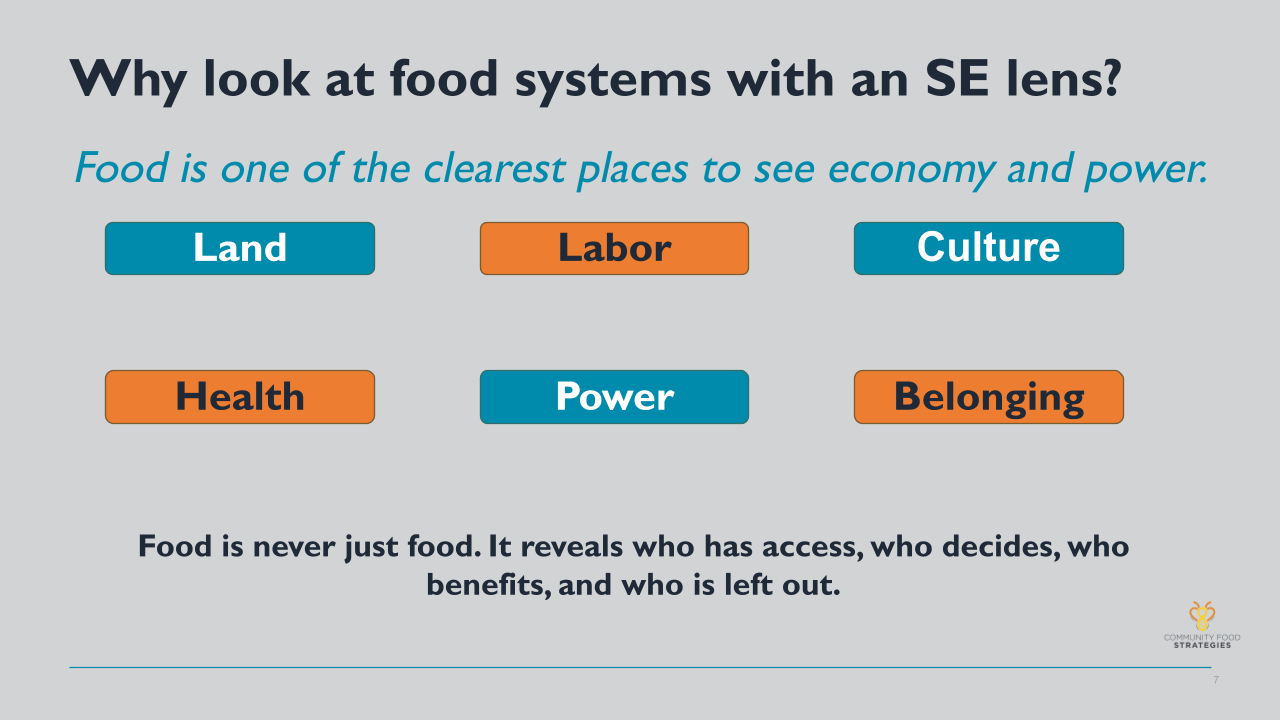
By promoting principles such as living wages, local production, and democratic decision-making, solidarity economics can help address issues such as food insecurity, exploitation of workers, and environmental degradation within the food system.
Solidarity economies foster relationships based on equality and reciprocity, empowering marginalized communities, and promoting sustainability.

What’s in a Name?
- Stacey Sutton


How Can Solidarity Economics Be Used to Create the Food Future We Want?
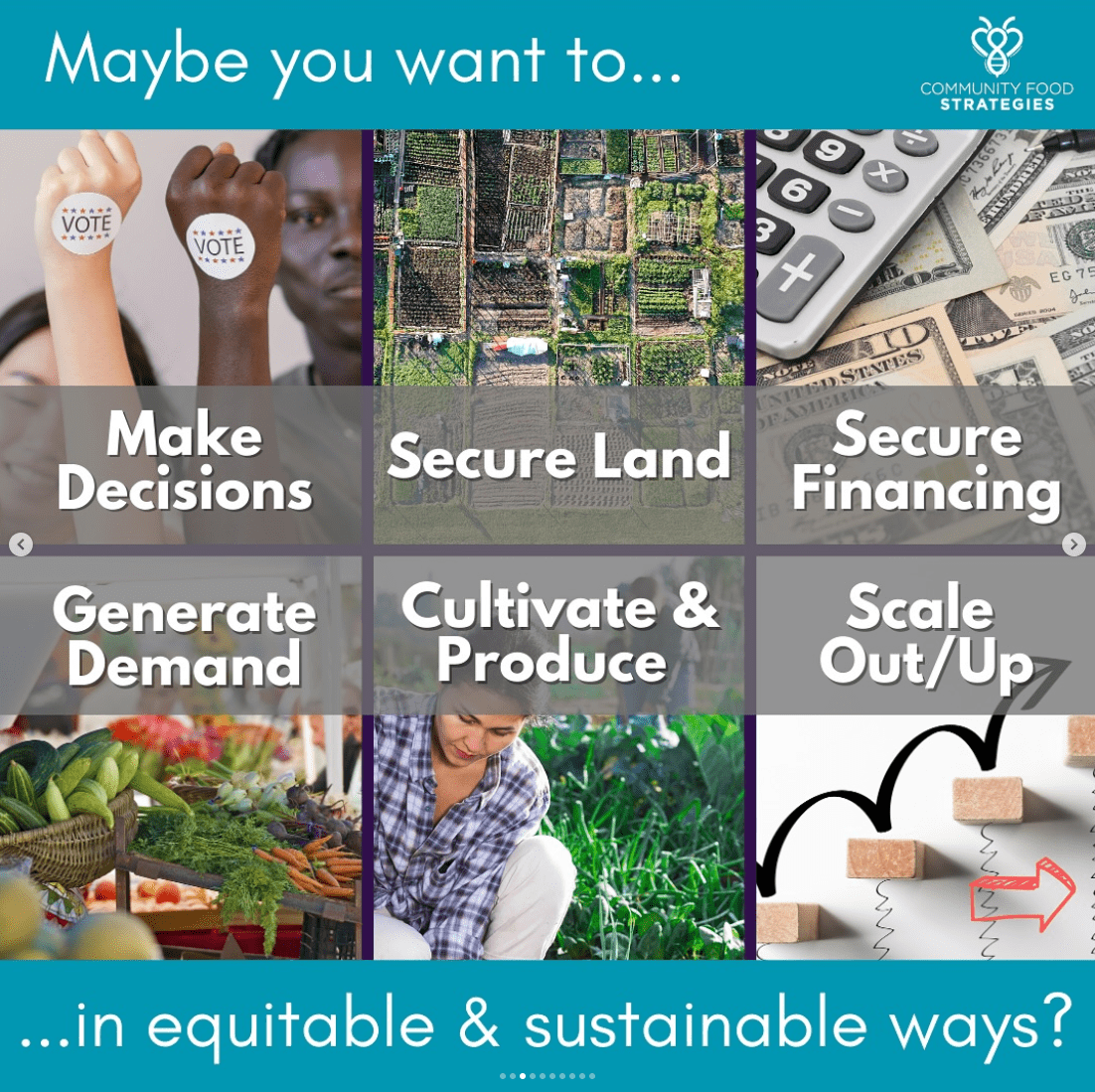
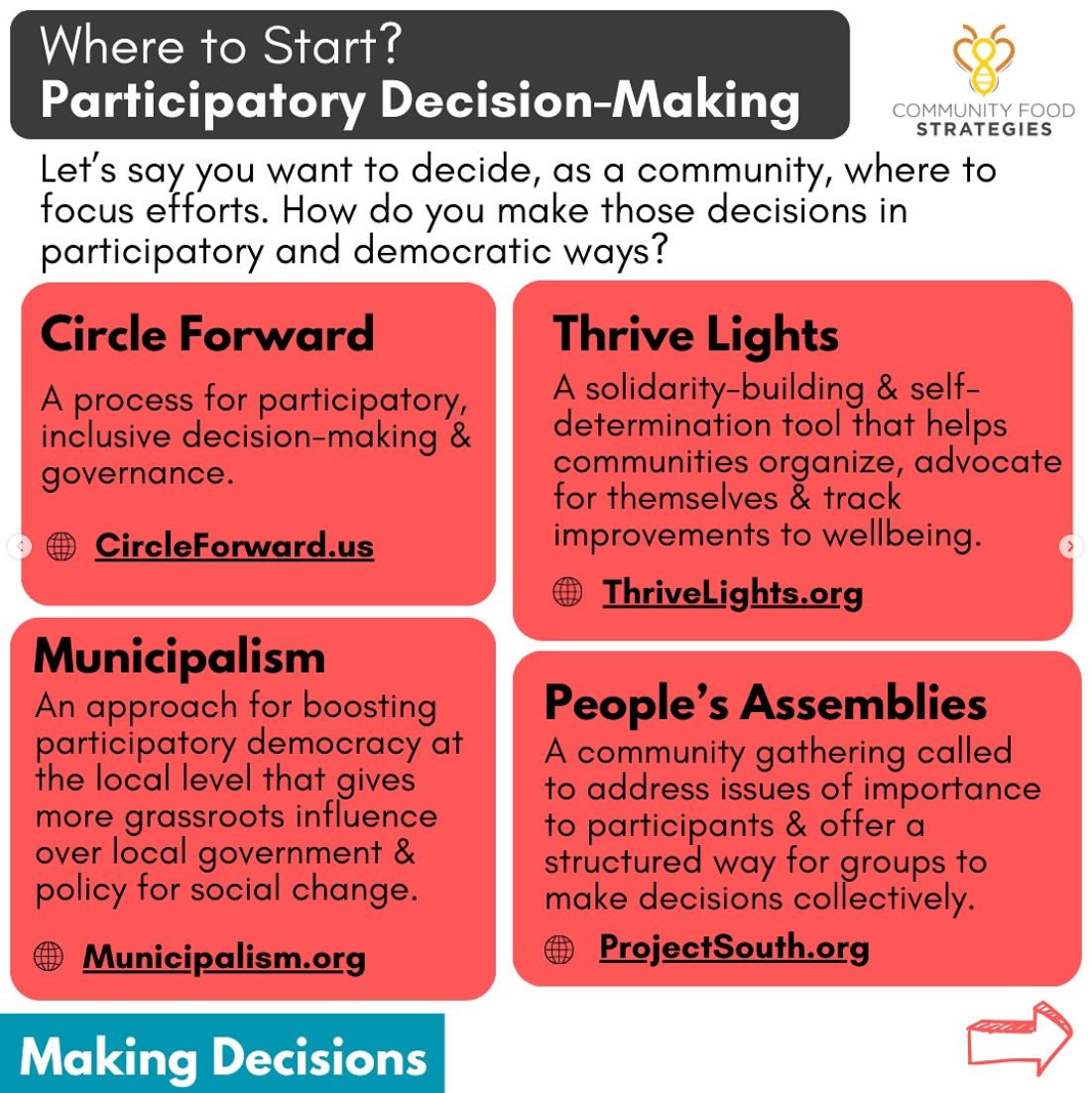
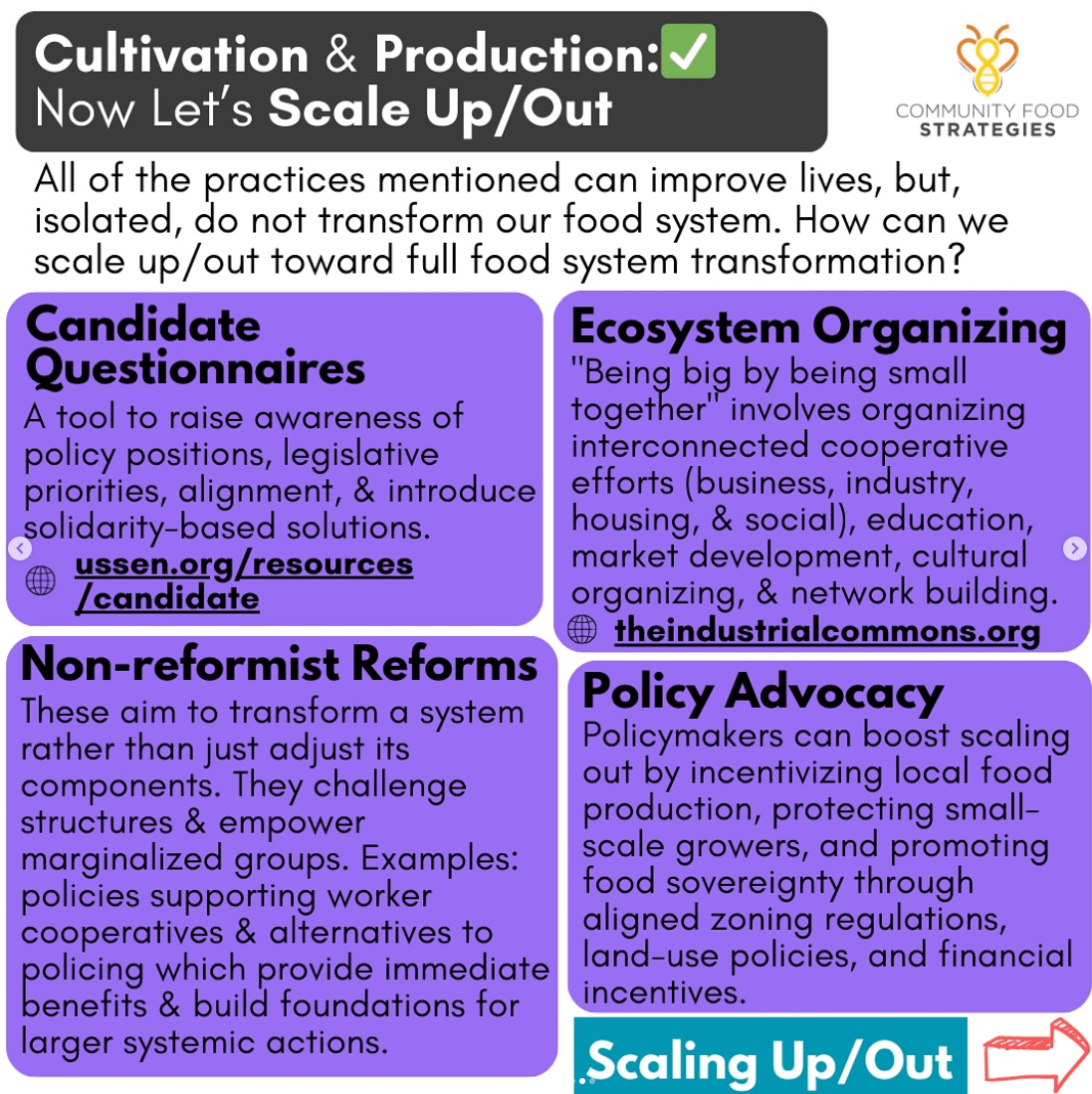
Community Food Strategies has been exploring value-based practices in the name of the solidarity economy that can help guide community food system efforts in ways that promote equity & sustainability from decision-making to financing and securing resources to implementation to scaling out/up.
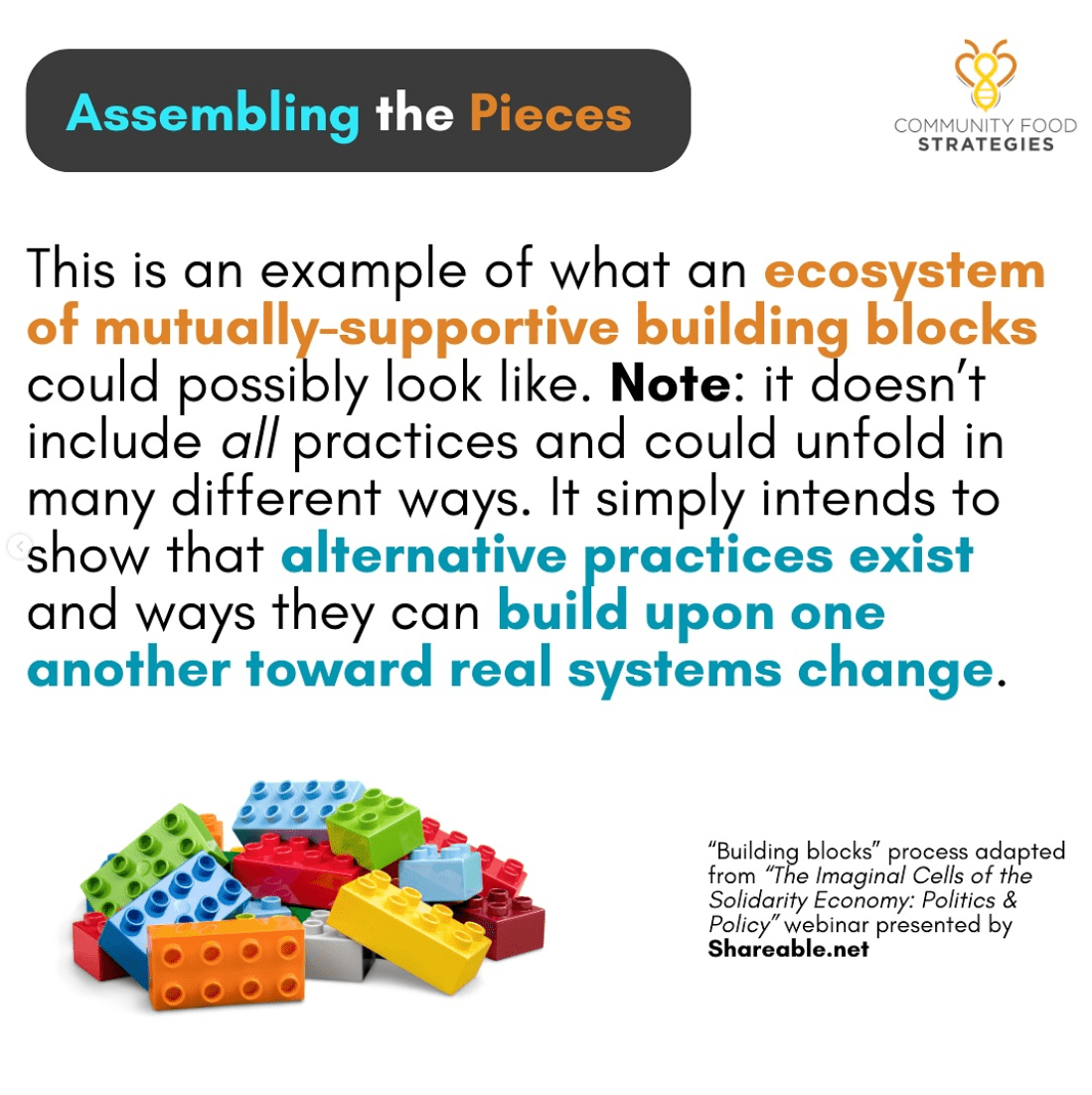
The solidarity economy highlights a spectrum of community practices that, when pulled together, can become an ecosystem of mutually-supportive building blocks toward an equitable & sustainable food future.
Let’s look at an example of what this progressive food ecosystem building might look like…
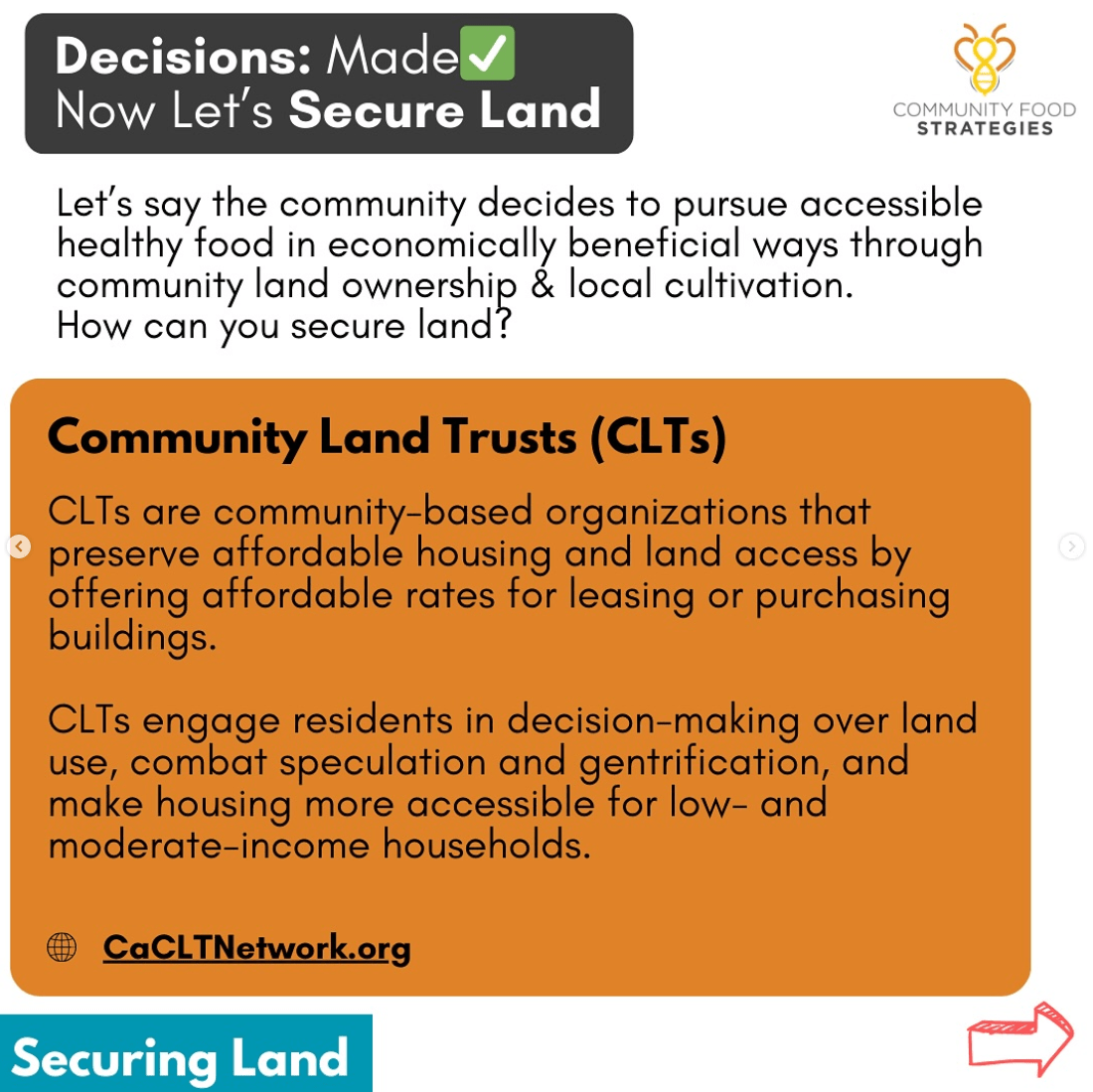
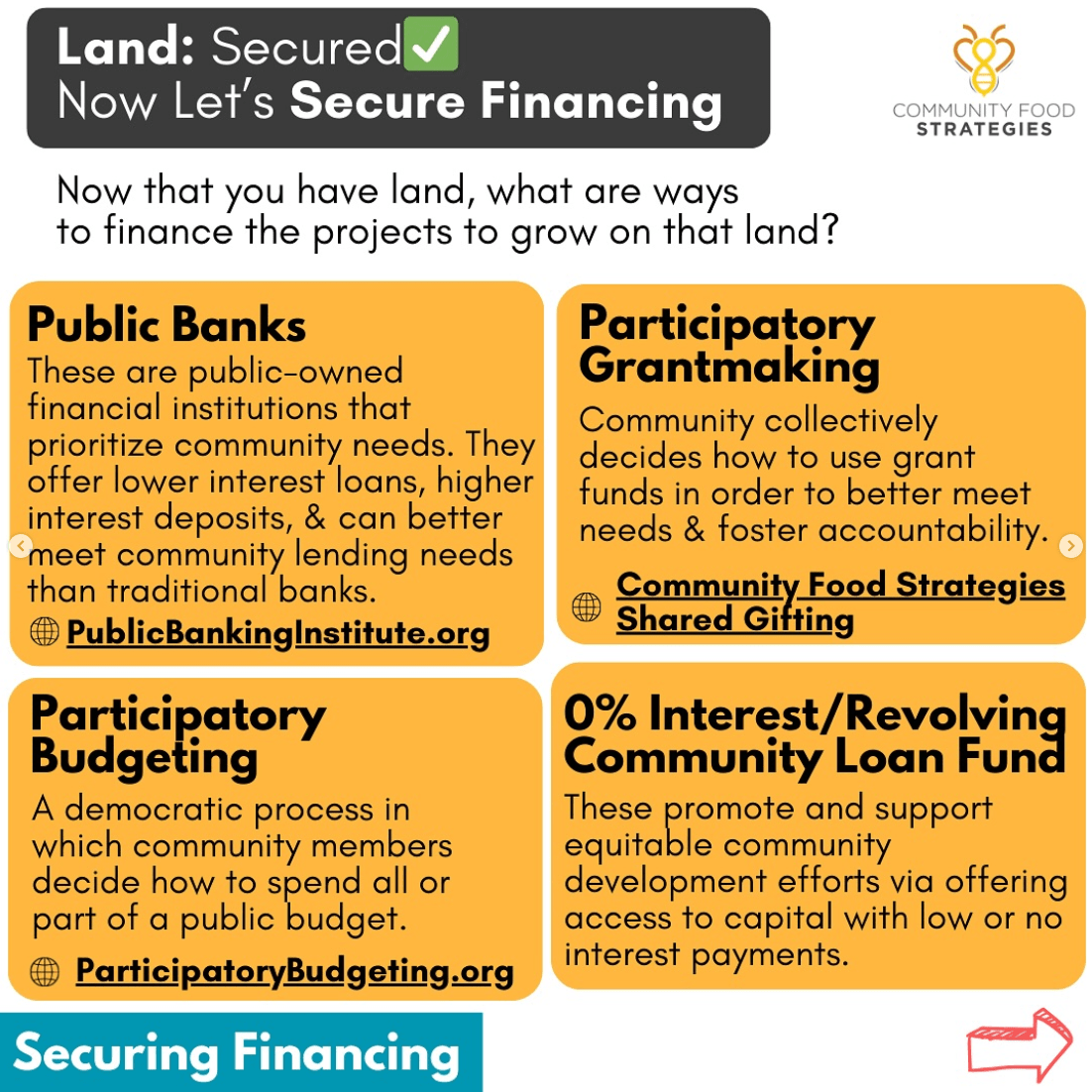
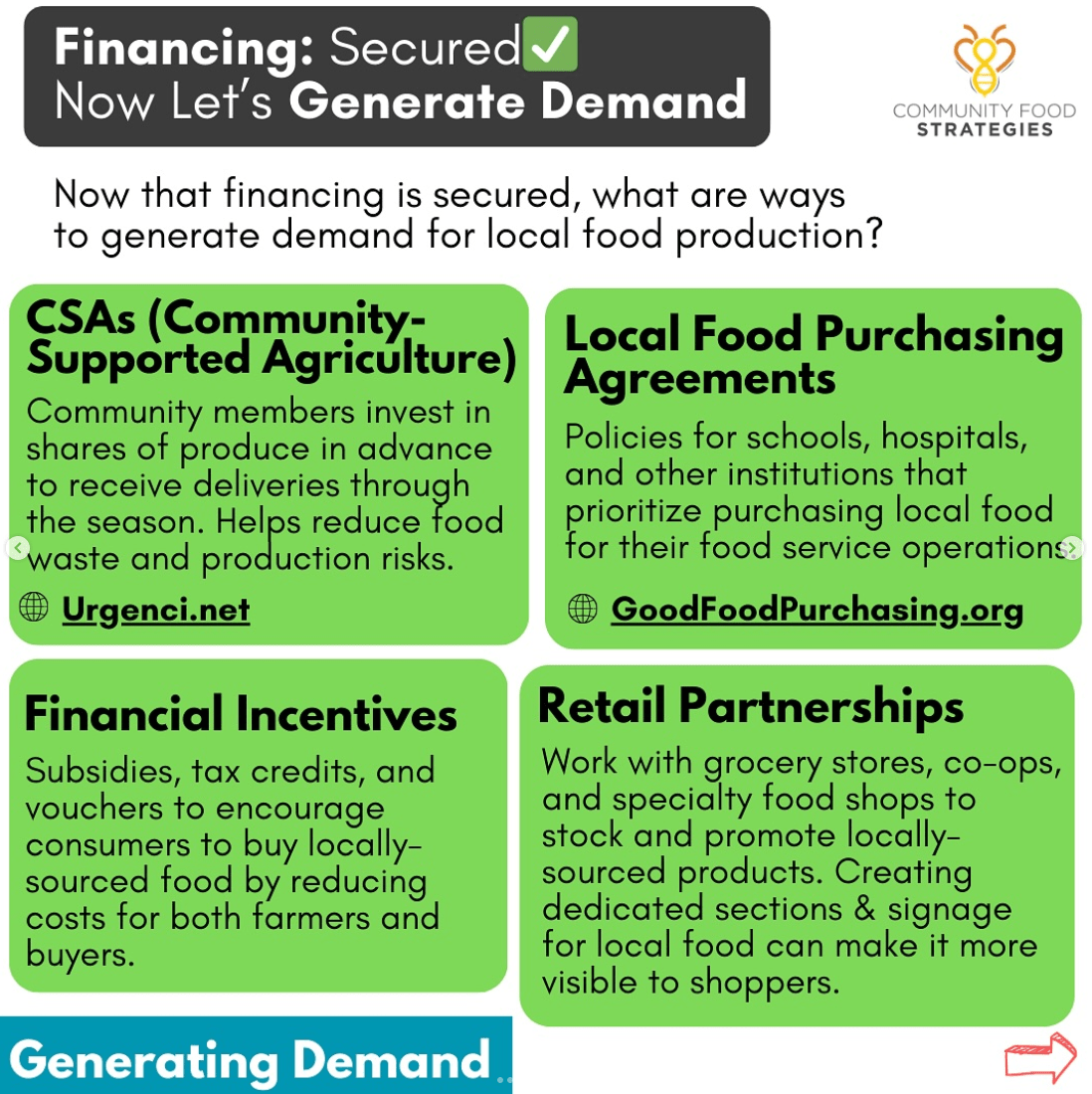
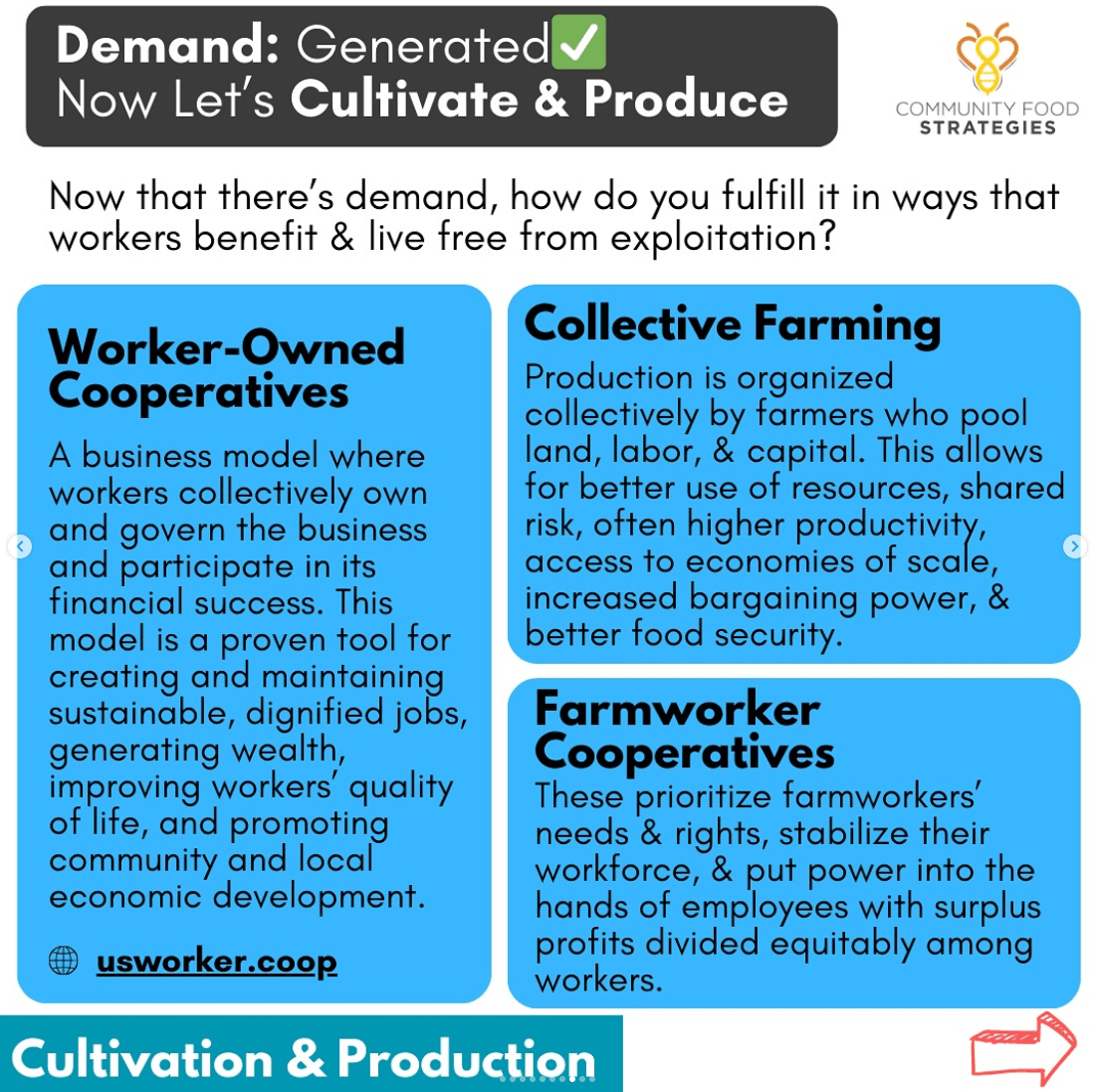
Our Solidarity Economies Integrations